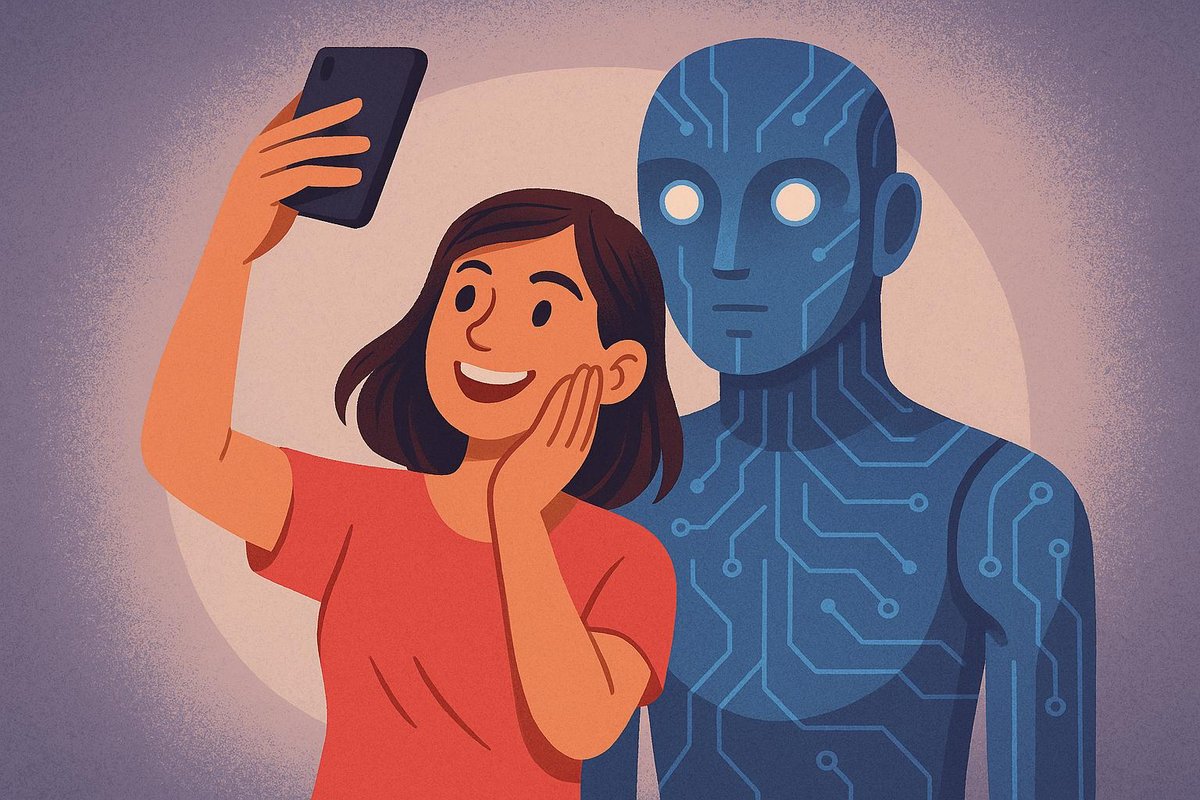
The mirror used to reflect just us. Now, augmented by artificial intelligence, it can show us anything: an airbrushed ideal, a playful avatar, or a perfectly lit portrait captured effortlessly. The rise of AI-enhanced photography, particularly in selfies, has opened up incredible creative avenues, making professional-quality self-portraits accessible to everyone. But as we embrace these digital doppelgängers, we must confront the emerging terrain of Privacy, Ethics & the Future of AI Selfies. This isn't just about pretty pictures; it's about authenticity, control, and the digital footprint we leave behind.
AI algorithms can analyze your facial features and photographic elements with stunning precision, refining skin tone, removing blemishes, and even altering expressions. This capability, born from deep learning models trained on vast datasets, can generate realistic visuals that empower novice photographers and professional artists alike. Yet, this power brings with it profound questions about who we are, who we want to be, and what responsibilities we hold when the lines between reality and algorithmically-generated imagery blur.
At a Glance: Key Challenges of AI Selfies
- Authenticity Crisis: AI can create unrealistic, idealized self-representations, fostering unhealthy beauty standards and impacting self-perception.
- Deepfake Dangers: The same AI that perfects a selfie can be misused to generate deceptive or harmful "deepfake" content.
- Privacy Paradox: AI systems collect and store extensive personal data from your images, raising significant concerns about security, consent, and the permanence of your digital information.
- Algorithmic Bias: Training data often reflects societal prejudices, meaning AI can perpetuate or even amplify existing inequalities in image processing or facial recognition.
- Accountability Gap: As AI decisions become more complex and opaque, assigning responsibility for errors or misuse becomes increasingly difficult.
- Ethical Design Imperative: Consciously embedding human values like fairness, transparency, and responsibility into AI from its inception is crucial for a beneficial future.
The Allure of the Augmented Self: How AI Elevates Your Selfies
It's easy to see why AI selfies have exploded in popularity. Imagine effortlessly achieving that "perfect" shot without hours of editing or professional equipment. AI analyzes your image, identifies areas for improvement—from subtle skin smoothing to comprehensive lighting adjustments—and applies enhancements that make you look your best, often with a single tap. This democratizes high-quality photography, giving everyone the tools to capture appealing self-portraits.
For artists and designers, AI is a powerful muse. It can transform a basic selfie into a Renaissance painting, a cyberpunk portrait, or a whimsical cartoon. It extends creative possibilities, allowing for unique content generation that pushes the boundaries of traditional art forms. The ability to generate AI selfies is not just a novelty; it's a new medium for self-expression, offering endless customization and stylistic exploration.
But beneath the polished surface, a complex web of ethical considerations begins to unravel.
The Unseen Costs: Authenticity, Idealization, and Identity
The pursuit of the "perfect" AI-enhanced selfie often leads to a subtle yet significant shift: a move away from authentic self-representation towards an idealized version. AI tools excel at removing blemishes, refining features, and conforming to prevailing beauty standards. While this might seem harmless or even empowering, it risks creating unrealistic self-representations.
When we consistently present, and internalize, an AI-perfected image of ourselves, it can foster unhealthy beauty obsessions. The gap between our "real" selves and our digitally enhanced avatars can grow, contributing to anxiety, body image issues, and a distorted sense of self-worth. Social media platforms, already fertile ground for comparison culture, exacerbate this by constantly showcasing a curated, often AI-filtered, version of reality. The pressure to maintain this digital ideal can become immense, eroding individuality in favor of algorithmic conformity.
The Deepfake Dilemma: When Enhancement Becomes Deception
The same AI capabilities that enhance your selfies also power a more sinister technology: deepfakes. These are synthetic media where a person in an existing image or video is replaced with someone else's likeness using deep learning. While often used for harmless entertainment, the potential for misuse is alarming.
Deepfakes can generate highly convincing but entirely fabricated images and videos of individuals saying or doing things they never did. This poses significant threats to reputation, privacy, and even democratic processes. From non-consensual pornography to political disinformation campaigns, the ability of AI to create hyper-realistic deception is a critical ethical challenge. Distinguishing between genuine and fabricated content becomes increasingly difficult, eroding trust in visual media and complicating our understanding of truth in the digital age.
Privacy Under the Pixel: The Data Goldmine in Your Face
Every time you upload a selfie to an AI-powered app, you're not just uploading a picture; you're often feeding a sophisticated data collection machine. AI systems thrive on data abundance. To "learn" how to enhance your features or transform your image, they analyze vast datasets of faces, expressions, and photographic elements. Your individual data—your unique facial geometry, skin tone, and distinguishing characteristics—becomes part of this ever-growing pool.
This raises profound privacy concerns:
- Extensive Data Collection: AI algorithms can collect and store extensive personal data derived from your images. This might include biometric data, details about your age, gender, ethnicity, and even emotional states inferred from your expressions.
- Storage and Security Risks: Where is this data stored? How is it secured? The potential for data breaches, unauthorized access, or misuse by third parties is a constant threat. Your selfie data could be used for purposes far beyond mere image enhancement, potentially without your explicit, informed consent.
- The "Forgetting" Challenge: Once your personal information is digitized and integrated into an AI training model, truly removing or "forgetting" it becomes technically complex. Even with regulations like GDPR aiming to grant individuals more control over their data, fully excising your data from a constantly learning AI system is a formidable task. This creates a lasting digital footprint that's hard to erase, challenging the very notion of individual control over one's own identity.
- Balance of Power: Corporations and governments, through extensive data collection and surveillance capabilities, gain significant leverage. Your face, captured through countless selfies, contributes to systems that could potentially identify, track, or analyze you in ways you never intended.
The Black Box & Bias: Cracking Open AI's Decisions
Beyond individual privacy, AI systems introduce systemic ethical challenges, especially concerning bias and the "black box" problem.
Bias: Hardening Old Inequalities into New Digital Laws
AI systems learn from the data they're fed. If this training data reflects historical prejudices, societal inequalities, or a lack of diversity, the AI will inevitably learn and perpetuate those biases. This isn't theoretical; it's already happening:
- Facial Recognition Flaws: Studies have shown facial recognition systems performing poorly on women and people of color, largely because their training datasets were overwhelmingly populated with images of white men. This leads to higher error rates, misidentifications, and potential discrimination in critical applications like law enforcement.
- Hiring Algorithm Disparities: AI tools designed to streamline hiring processes have sometimes perpetuated gender disparities, favoring male candidates simply because historical hiring data showed more men in certain roles. The AI learns from the past, cementing its biases into future decisions.
When AI systems with inherent biases are deployed at scale, their mistakes don't just affect individuals; they rapidly become societal problems, hardening old inequalities into new, seemingly objective, digital laws. Addressing this requires diverse and representative training data, careful algorithmic design, and constant auditing.
The "Black Box" Problem: Understanding Why AI Does What It Does
Complex AI systems, especially those built on deep neural networks, often operate as "black boxes." Even their creators can struggle to fully understand how they arrive at certain conclusions or generate specific outputs. The intricate layers of calculations and pattern recognition are so vast and interconnected that explaining the exact reasoning behind a given "decision" is incredibly difficult.
This opacity presents a significant ethical challenge, particularly in high-stakes decisions:
- Lack of Accountability: If an AI system makes a critical error – perhaps misdiagnosing a disease, incorrectly approving a loan, or generating a problematic image – who is responsible? When the internal workings are inscrutable, assigning accountability becomes a nightmare. Ethicists largely agree that humans remain accountable, as AI is a tool, not a moral agent.
- Difficulty in Diagnosis and Correction: Without understanding why an AI made a mistake, it's incredibly hard to fix it. This hinders improvement, perpetuates errors, and undermines trust.
The push for "Explainable AI" (XAI) aims to tackle this. XAI seeks to create more transparent models that can articulate their reasoning in an understandable way, allowing developers and users to diagnose errors, identify biases, and build greater confidence in AI systems.
Building a Better AI Future: Principles and Practices for Ethical AI Selfies
Addressing the profound ethical challenges of AI selfies and broader AI integration requires a conscious, multi-faceted approach. Every AI system, implicitly or explicitly, carries human values encoded in its training data and design choices. Building an ethical AI future means making deliberate moral decisions.
1. Prioritize Ethical AI Design from the Outset
Ethical considerations cannot be an afterthought. They must be embedded into the very foundation of AI development. This means:
- Conscious Value Embedding: Designers and developers must actively choose which human values (e.g., fairness, privacy, transparency, human dignity) to prioritize. This often involves trade-offs, such as choosing fairness over raw accuracy in some contexts.
- Diverse Teams: Developing AI with diverse teams helps identify potential biases in data and algorithms that might otherwise be overlooked.
- Impact Assessments: Regular ethical impact assessments should be conducted throughout the AI development lifecycle, evaluating potential harms and unintended consequences.
2. Embrace Transparency and Explainability (XAI)
Users deserve to understand, at least to a reasonable extent, how AI-powered tools function and why they produce certain results.
- Clear Disclosure: Apps should clearly disclose when AI is being used to alter images, especially for significant changes, rather than presenting them as unedited reality.
- Explainable Outputs: Where feasible, AI systems should be designed to provide explanations for their decisions or modifications. While full "black box" transparency might be a long-term goal, progress can be made by highlighting specific changes made by the AI or offering insights into its reasoning.
3. Champion Robust Privacy and Data Governance
Protecting personal data is paramount. This requires a combination of strong regulation, corporate responsibility, and user empowerment.
- Strong Regulations: Frameworks like GDPR provide a good starting point, establishing rights for data subjects and obligations for data controllers. However, AI's unique challenges may necessitate even more targeted regulations, especially concerning biometric data derived from images.
- Corporate Accountability: Companies developing AI selfie apps must adopt "privacy by design" principles, minimizing data collection, anonymizing data where possible, and implementing robust security measures. They need to be transparent about what data they collect, how it's used, and who it's shared with.
- Meaningful Consent: Users should be given clear, concise, and understandable options for consent regarding their data, rather than being forced to accept lengthy, opaque terms of service. Consent should be granular, allowing users to control specific data uses.
4. Foster User Empowerment and Digital Literacy
Individuals play a crucial role in navigating the AI landscape responsibly.
- Educate Yourself: Understand the privacy policies of AI apps you use. Be aware of what data you're sharing and what the potential implications are.
- Critical Engagement: Cultivate a critical eye towards AI-generated content. Question the authenticity of images you encounter, and be mindful of the potential for deepfakes.
- Data Control: Exercise your rights to access, correct, or delete your personal data whenever possible, leveraging existing privacy regulations.
5. Demand Accountability and Responsibility
The question of who is responsible for AI's errors or misuse must have a clear answer.
- Human Oversight: Ensure human review and oversight are built into critical AI systems, especially those with high-stakes outcomes.
- Liability Frameworks: Develop legal frameworks that clearly assign liability for harm caused by AI systems, motivating developers to build safer, more reliable tools.
Navigating Your AI Selfie Journey: Practical Advice
Using AI for selfies can be fun and creative, but a thoughtful approach is key.
- Read the Fine Print (Seriously): Before downloading any AI selfie or photo editing app, take a few minutes to review its privacy policy. Understand what data the app collects, how it's stored, whether it's shared with third parties, and for what purposes. If it feels too invasive or unclear, consider alternatives.
- Be Mindful of Biometric Data: Some apps might specifically mention collecting or processing biometric data (like facial geometry). This is highly sensitive. Be extra cautious about apps that aren't transparent about its use and protection.
- Question Perfection: Remember that AI-enhanced images are often idealized. Don't let them dictate your self-perception or create unrealistic expectations for yourself or others. Celebrate authenticity.
- Consider Offline Processing: If an app offers it, opt for AI processing that happens directly on your device rather than sending your images to cloud servers. This can significantly reduce privacy risks.
- Educate Yourself on Deepfakes: Learn the tell-tale signs of deepfakes (though they're getting harder to spot) and approach any highly sensational or unusual visual content with skepticism.
Common Questions About AI Selfies and Ethics
Is using AI for selfies inherently unethical?
No, using AI for selfies is not inherently unethical. It offers creative tools and accessibility for photography. The ethical concerns arise from how the AI is designed (e.g., bias in algorithms, data collection practices) and how users interact with and perceive AI-generated content (e.g., impact on authenticity, potential for misuse).
Can AI deepfakes always be detected?
Currently, there are tools and techniques to detect many deepfakes, often by analyzing subtle inconsistencies or artifacts in the generated media. However, deepfake technology is rapidly evolving, making detection increasingly challenging. The race between deepfake generation and detection is ongoing.
How can I protect my privacy when using AI photo apps?
To protect your privacy:
- Read Privacy Policies: Understand what data is collected and how it's used.
- Limit Permissions: Grant only essential permissions (e.g., access to photos, not your microphone).
- Opt for Local Processing: Choose apps that process images on your device if available.
- Use Reputable Apps: Stick to well-known developers with transparent privacy practices.
- Be Selective: Don't share sensitive photos with unverified apps.
What is 'explainable AI' (XAI) and why is it important for selfies?
Explainable AI (XAI) refers to methods and techniques that allow humans to understand the output of AI models. For selfies, XAI would help you understand how an AI app altered your image—e.g., "The AI smoothed skin by X amount," or "The AI adjusted lighting to highlight your eyes." This is important because it fosters transparency, builds trust, helps identify and correct biases, and allows users to make informed decisions about the changes applied to their likeness.
Who is responsible if an AI selfie app creates a problematic or biased image?
Ethicists generally maintain that humans remain accountable. While the AI is a tool, the developers who programmed it, the company that released it, and potentially the user who deployed it all share responsibility. The push is for developers to build ethically sound AI, and for companies to implement human oversight and accountability frameworks.
The Road Ahead: AI That Serves Humanity
The future of AI selfies, and AI in general, hinges on a crucial choice: will we prioritize convenience and profit, or transparency, fairness, and responsibility? As AI systems become more powerful and integrated into every aspect of our lives, from personalized news feeds to critical decisions like loan approvals and healthcare prioritization, the ethical challenges will only intensify.
Addressing AI ethics isn't solely the job of technologists. It requires cooperation across technologists, policymakers, academics, and the public. It means choosing transparency over convenience, fairness over speed, and responsibility over immediate profit. By consciously embedding human values into AI's design, demanding rigorous ethical oversight, and fostering a digitally literate populace, we can ensure that AI serves humanity, enhancing our lives without compromising our privacy, authenticity, or fundamental rights. Your next selfie isn't just a picture; it's a statement about the kind of digital future we're building, one pixel at a time.